Retrospective · October 2026
four routes, none of them straight
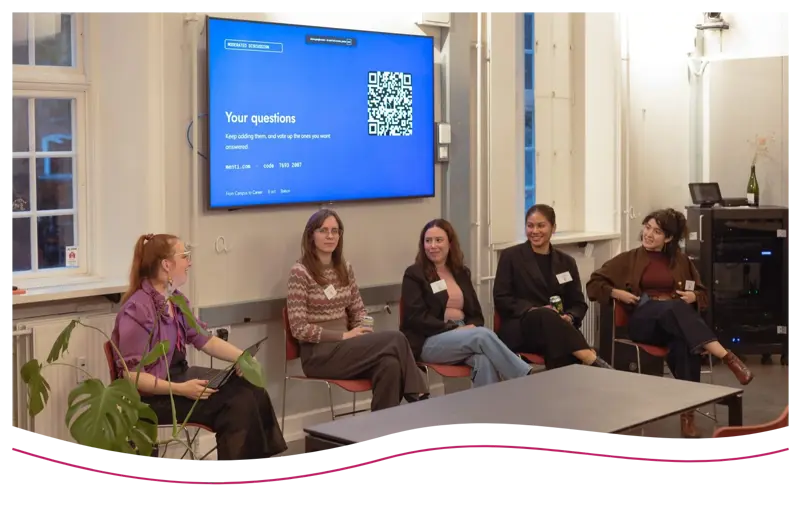
The Second Edition of AI × Learning series explored From Campus to Career: Networking in Tech. Four people who had moved from studying into tech work, recently enough to remember it clearly, shared with the room how it actually went. None of them claimed to have it figured out. That was the point.
From Campus to Career: Networking in Tech
About 8 minutes to read

Our guests:
Helena Jes Starzak, UX Researcher at EyeReply;
Oom Noksakul, Product and Service Designer at DFDS;
Celia LN Polonio, Jr. Operations Engineer at Oktogrid;
and Lilla Nogrady, Research Operations Specialist at Milestone Systems.
Moderator: Erzsébet Bálint.
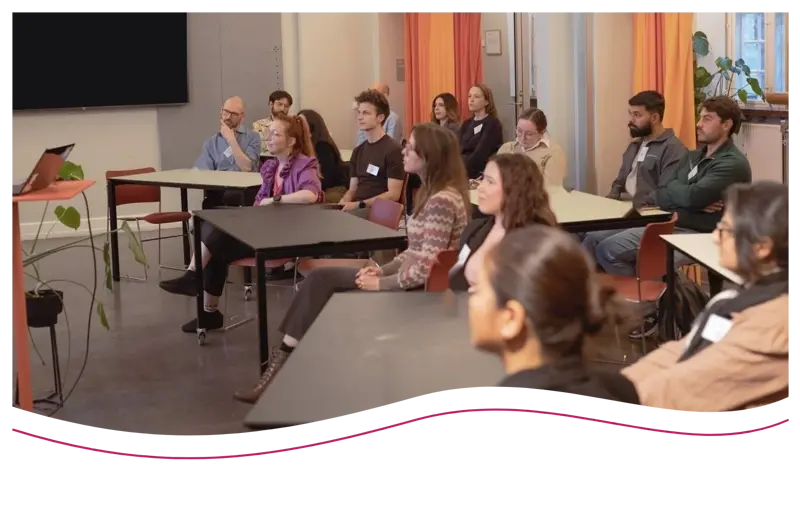
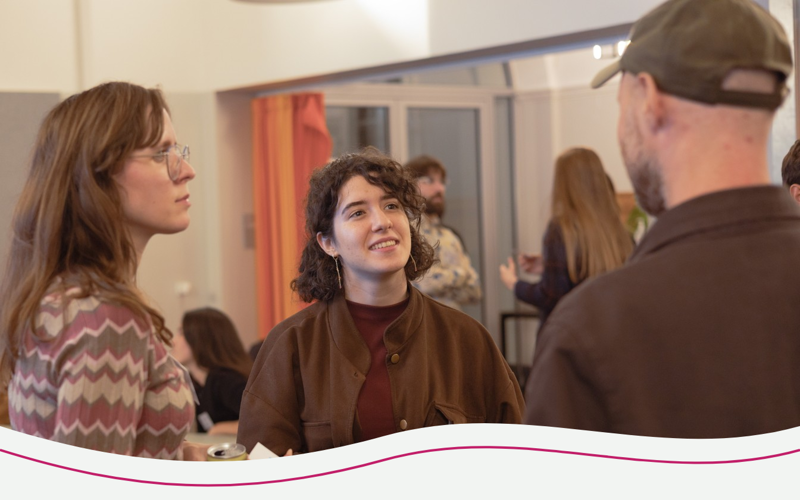
The evening followed the l x l format: short talks, then open discussion, with audience questions collected in writing during the talks. The room soon joined in, and by the end close to 30 people were building on each other's answers. What follows is not a full record. It is the four themes that came up most, in the speakers' own words, edited for reading.
adapting to the room
What cultural challenges did you face, and how did you adapt?
Oom: I think I’m still figure this out. When I worked in Asia, it was for an international consulting firm, but the clients were Asian companies, which are hierarchical. So I had to learn two cultures at once. The international companies are easier for me because of the defined methodologies. While the culture here is very flat. Everyone has opinions, and anyone can say anything. I had to drop the hierarchy and listen for what people were actually trying to say, and work out who the decision-maker was.
I come from a result-oriented background. Danish companies tend to prefer alignment. So I had to adjust. Focus less on jumping to the solution, more on progress, step by step. Look around the room, check there's agreement, then keep going.


The others recognized the flatness but not always the same rules. Lilla pointed to something newcomers often miss: lunch. “We have lunch together every day, and everybody is invited. It's part of work.” Being part of the community matters a lot, also when things at work become uncertain.
Helena works at a small company where that doesn't happen, and she was honest about it. "I hate the phony, smiley manager who says 'we're all going!'" When her team does make time, it's planned and real, and they have fun.
Oom is very introverted but still goes to job fairs and events. The method is simple: "Ask people about their roles or company cultures. People like to talk about themselves". It gets easier with practice over time. "But I'm still an introvert at the end of the day". Afterwards comes a quiet evening at home to recharge.
Celia added that even inside one culture, people work in very different ways. Culture explains where someone comes from, not who they are. Her advice for the start of a new job: stay open to all the ways people work, and work out your own along the way.

detours that were not mistakes
For example, Helena, you moved through databases and marketing automation before your current job. Did either feel like a mistake at the time?
Helena: Not at the time. It's more afterwards, once you've chosen a new direction. Every step, you learn something new about yourself. "Mistake" is a big word. I still think in database structures today, and I still manage data. I'm just glad I'm not only sitting at a PC looking at code.
My first white-collar job was at a big company. I had nothing to compare it with, but the shoes didn't quite fit. Everyone was nice, but I sat in a big open room like this one, and it felt wrong. Now I know I like to sit in the corner. Back then, I never thought "I want to be here for 10 years".
I feel that where I am now.


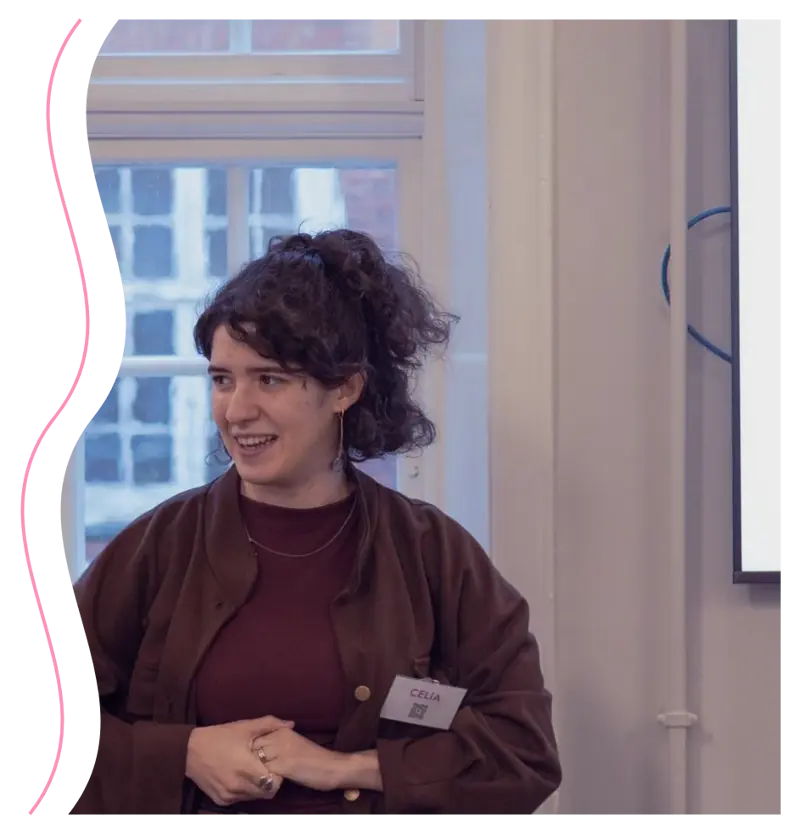

Nobody on the panel described their route as a plan that worked. Celia left a stable corporate job when she moved to Denmark. "It can feel like a mistake, and it's scary", she said. What helped was a simple reminder: in six months, it won't be a big deal. "If you're doing things you like and putting yourself out there, it will make sense at some point, even if it doesn't now".
Lilla went further. She ended up where she always wanted to be, without knowing she wanted to be there. Some rejections hurt at the time because she was sure she was a good fit. Looking back, she thinks those doors were right to stay closed. "Sometimes recruiters see something you don't see yet."


Oom was the most candid about the gap between plan and reality. Oom came to Denmark to pursue a sustainable design/transition path, and now designs a transport management system for logistics planners. "How can this really drive sustainability? That's a big question mark in my head from time to time."
Fewer kilometres driven means lower emissions, so the impact is somewhere there, just indirect. The focus on sustainability isn’t the product Oom imagined, but not a mistake either.
the importance of a follow-up
What got you your first job here?
Lilla: It was a student job in sales, and I didn't get it at first. Since I had a few rounds of interviews, after I got the rejection, I wrote to ask for feedback. No answer for two or three weeks.
Then the hiring manager reached out if I could come in for one last round the next morning. I went, and I got the job. Later I asked why, he said I was flexible, and I had reached out.
So now I always follow up. Their answer might not be fast, but yours should always be. Thank them for the opportunity, leave something they'll remember you by, and ask for feedback.
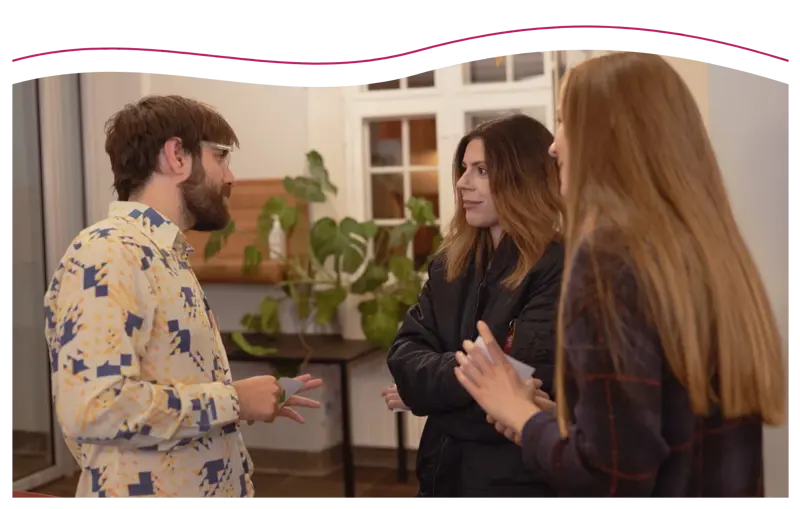

As the moderator, Erzsébet, put it, being proactive is a skill you can't just claim on a CV. You have to show it.
Oom's story was less dramatic, and maybe more familiar. After graduating, there was no single turning point. "It wasn't a breakthrough. It was iteration over time." Automatic rejections turned into manual ones, then a first interview, then two rounds that ended at the last step, then a yes. Each rejection came with a question: what was the feedback? Along the way, Oom learned how to tell a story about the work in a humble way, while still showing what the company needs.
AI as a second brain
How do you use AI, and how much do you trust it?
Oom: I use AI as extra hands, but not replacing my brain. The UI output may look polished, but is it really friendly for your users? You are the one who knows the user needs and the problems you're solving. AI can't do that critical thinking for you. Use it to save time, not to save you from thinking. You still have to own the work at the end of the day.

This was where the room joined in most, and where the mood was most mixed. Nobody dismissed AI. Nobody was entirely comfortable with it either.
Helena uses it for small, specific things. When she had to recruit people with job titles from fields she knew nothing about, AI helped her understand who to contact. But deciding whether someone is the right participant stays with her. "That's human work. AI can't touch that."


Lilla sees research becoming more important, not less. "Now that we can build anything in minutes." Someone has to ask the old questions: what are we solving, and does anybody need it? She also admitted that AI tools she’s using as part of her work took about two years before she trusted them.
Several people in the audience spoke up. One reminded us that every prompt has a carbon cost, so it's worth thinking before typing. AI should be a second brain, not the first. Another worried about a future full of products built quickly, with no UX and no real value. A third pointed out that AI support agents can help users and companies at the same time, when they are set up well.
Celia connected the threads. Whether you're briefing a colleague or an AI, the hard part is the same: giving enough context while keeping it simple. "It sounds easy. It's not engineering. But it's very hard to do without losing information."
what we take with us
Looking back at the evening, what stands out is how little anyone pretended. Oom is "still figuring it out". Lilla took years to see her route clearly. Helena only knew the first office was wrong once she found the right one. Celia called it walking on shifting sand, and said that with AI we are all still spectators, watching what happens inside the black box.
That honesty is what we hope these evenings are for. Not polished success stories, but people further along and people just starting, working on the same question in the same room.
Thank you to Helena, Oom, Celia and Lilla for sharing their routes, and to everyone who stayed for the dinner and the conversation after.
